Showcasing Graduate Voices and Scholarship
Research Café is a key component of Grad CareerCraft: Tools for Diverse Professional Futures, the School of Graduate Studies’ initiative to support graduate students in developing versatile skills for a range of careers. By fostering interdisciplinary communication, public speaking confidence, and constructive peer engagement, Research Café directly contributes to students’ professional development and research communication skills, critical competencies valued both within and beyond academia.
As part of the broader Grad CareerCraft ecosystem, Research Café helps students practice translating complex ideas for varied audiences, network across fields, and build a stronger sense of scholarly community, all in a welcoming, low-stakes environment. Please contact Dr. Ramazan Gungor at rg835@grad.rutgers.edu with any questions about Research Cafe.
Please join us on Zoom for a Research Café featuring two exceptional PhD students whose work addresses urgent global and public health challenges.
Rebecca Garcia (Chemical Engineering) will share how invasive Sargassum algae can be enzymatically deconstructed and converted into biofuels and high-value products, turning an environmental burden into a renewable resource. Hayley Palmer (Food Science) will present research on hemp extract and cardiometabolic health in postmenopause, examining how phytocannabinoids such as CBD may influence metabolism, cognition, and exercise capacity.
Two timely topics. Two rigorous, interdisciplinary projects. We hope you will join the conversation.
Turning Trash into Treasure: Enzymatic Deconstruction of Invasive Brown Algae for Biofuel and Product Synthesis
Sargassum, an invasive brown algae, has increasingly accumulated annually in regions throughout the world, such as the Caribbean, and Mexico, washing up on beaches. Tonnes and tonnes of this material ends up on coasts, undergoing degradation, due to the lack of space in landfills, negatively impacting both local economies and environments. Despite being a physical nuisance, this biomass is abundant in complex sugars and materials which can be broken down and extracted for applications ranging from biofuel, to biostimulants. To further elucidate these benefits, my research has focused on three main objectives; determining composition of the algal biomass and how to process it, identifying and characterizing enzymes for sugar deconstruction, and developing minimal cocktails with bioprocessing systems for biomass deconstruction. To better understand composition and biomass structure, I have done linkage analysis, developed methods for hydrolysis, and worked to develop pretreatment methods to improve accessibility. Enzymes that have and will be characterized were identified from literature, bioprospecting, and from methods of protein engineering. Through this process of characterization, I want to be able to determine activity on real world substrates under marine-like conditions. Lastly, based on the individual enzyme characterization, and optimal assay conditions, I want to develop minimal cocktails to deconstruct the major polysaccharides within the biomass, simplifying the substrate in a concerted manner for downstream applications such as fermentation or biostimulant synthesis.
Rebecca Garcia
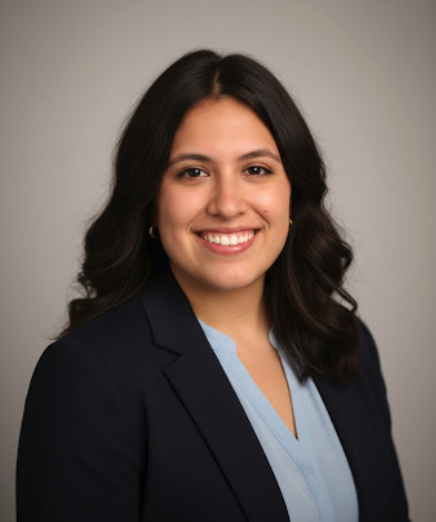
Rebecca Garcia first began her research career in high school, working as an ACS Project SEED scholar at Skidmore College, studying starch deconstruction with targeted enzymes for biofuel applications. At Barnard College, as a Science Pathways Scholar, she initially studied migration patterns of Easter Box Turtles in collaboration with the American Museum of Natural History, and then established a tenure in a chemical engineering laboratory at Columbia University, studying phenazine conversion using enzymes, for flow cell applications. Prior to starting her PhD, she worked at the National Renewable Energy Laboratory as a GEM Fellow, studying plastic recycling using targeted enzymes. Presently, Rebecca is a PhD student in the Chemical Engineering Department at Rutgers, advised by Shishir Chundawat, studying the enzymatic deconstruction of invasive brown algae.
Investigation of Hemp Extract for Cardiometabolic Improvement in Postmenopause
Decline in 17β-estradiol (E2) during postmenopause is associated with the onset of vasomotor symptoms, decline in mood and cognitive function, and elevated risk for cardiovascular disease and osteoporosis. Surveys reveal that women are using phytocannabinoid preparations to alleviate menopause related symptoms in the absence of clinical support. Cannabidiol (CBD) is the primary phytocannabinoid found in Cannabis sativa L. Our prior work was the first to demonstrate that ovariectomized (OVX) mice supplemented with CBD had improved metabolic and bone phenotypes. The objective of the present work was to determine how full spectrum hemp extract (containing CBD and minor cannabinoids) affects exercise capacity, behavior, and metabolic health endpoints in OVX and SS mice. OVX and SS C57BL/6J mice were perorally administered full spectrum hemp extract containing 25 mg CBD/kg/day for 12 weeks. Preliminary data suggests the effect of hemp extract on cardiometabolic health and cognition may be dependent on estrogen status. Compared to vehicle (peanut butter and coconut oil), OVX mice supplemented with hemp extract had reduced body weight. Hemp extract may worsen glucose tolerance and cognition/memory in SS mice. Hemp extract increased exercise power and locomotor activity in both groups. Additional work will determine how hemp extract influences health biomarkers in OVX and SS mice.
Hayley Palmer

Hayley Palmer is a PhD student in the Food Science Department at Rutgers University, working under the mentorship of Dr. Diana Roopchand. Her research focuses on the use of phytocannabinoids for cardiometabolic improvement in postmenopause. She received her B.S. in Food Science from the University of California, Davis. Prior to entering graduate school, she worked in the food and dietary supplement industry in quality and regulatory roles. After completing her PhD, she plans to return to industry to pursue a career in research.
El Limbo de la Bemba: Puerto Rico Educators Resisting Cultural Erasure in Language Education Spaces.
Language is racialized through standardized practices, isolating learners from their cultural identity, especially within the United States territories. Language educational settings and throughout dominant curricula, students’ home language must be lost or “fixed” to obtain standard language proficiency (Flores & Rosa, 2015). This study offers insight into Puerto Rican educators' approaches within language education classes, fostering cultural and linguistic identity through Translanguaging practices (Garcia & Wei, 2015). Exploring ways the United States’ ideologies have mapped the language education of Puerto Rico and how race or raciolinguistics (Flores & Rosa, 2015) impact the curriculum today through educators’ perspectives, interweaving languages, without constraints, and implementing liberating language practices (España & Herrera, 2020). Focusing on language as a social act (Otheguy, Garcia, & Reid, 2015, Vygotsky, 1978), these educators co-construct language classes to foster cultural customs and language practices to avoid vergüenza (shame), language anxiety (Mari & Carroll, 2021), and fear when a monoglot approach is used. Navigating next steps to take this research and develop it further, would be beneficial for feedback.
Sheila Marie Feliciano

Sheila Marie Feliciano is a Puerto Rican, third-year Ph.D. student in the Graduate School of Education, a K–12 educator, and university instructor whose research examines language education in Puerto Rico through decolonial, raciolinguistic, and ethnographic frameworks. Her work centers on educators' perspectives navigating Spanish, English, and bilingual/dual-language classrooms shaped by U.S. colonial language policies. Drawing on Plática–Testimonio and historically responsive pedagogy, she explores how teachers modify curriculum and instructional practices to affirm students’ linguistic and cultural identities. Feliciano’s research challenges monoglot and standardized norms, committed to research that is relational, ethically grounded, and rooted in her ongoing work as an educator.
Breaking Inert C-H Bonds: Advancing Pincer-Metal Catalysis for Alkane Dehydrogenation and C-H Activation
Transportation fuels are indispensable, yet their primary source — fossil fuel reserves — is steadily depleting, highlighting the critical need for alternative, non-petroleum routes to liquid fuels. Among these, Fischer-Tropsch catalysis, using CO and H2 (syngas), remains the principal method for converting non-petroleum feedstocks into liquid fuels. Currently, the syngas for Fischer-Tropsch plants is derived from natural gas and coal, although oil shale, oil sands, biomass, and waste also offer potential sources. Fischer-Tropsch diesel comprises a stochastic distribution of saturated hydrocarbons, n-alkanes, although only C9– C19 alkanes are ideal as liquid transportation fuels. Hence, chain rearrangement of the surplus undesired short-chain alkanes is necessary. This requires the transformation of alkanes through activation of their very inert C-H bonds. A crucial step of it is alkane dehydrogenation to produce olefins, which undergo subsequent chemical transformations, giving rise to a broad spectrum of valuable commodity and fine chemicals. Pincer-metal complexes are well established as efficient catalysts for alkane dehydrogenation and C-H bond activation. Here, we report the catalytic activity of various pincer-ligand-based Ir, Ru, and Os complexes for these reactions.
Soham Chakraborty

Soham Chakraborty was born and raised in Krishnagar, West Bengal, India. He earned his 5-year BS-MS dual degree from the Indian Institute of Science Education and Research (IISER) Kolkata, India, in 2021. During his BS-MS thesis, he worked under the supervision of Prof. Sayam Sen Gupta on electrocatalytic alcohol oxidation using a high-valent molecular iron-oxo complex. In December 2021, he joined Prof. Alan S. Goldman’s group here, at Rutgers. In the Goldman Group, his research interests lie in experimental as well as computational organometallic chemistry, with a focus on mechanistic studies of catalytic transformations of small molecules – especially C-H activation and alkane dehydrogenation. Outside the lab, Soham is a poet. He enjoys writing, reading, listening to music, exploring cafés, and traveling to the national parks.
Genetic underpinnings of the proximo-distal elaboration of pectoral appendages during the fin-to-limb transition
The origin of the tetrapod limb remains an enigmatic puzzle in evolutionary biology. The elaboration of skeletal elements along the proximodistal axis is a hallmark of the fin-to-limb transition, marking the emergence of the tetrapod limb. While fish fins consist of proximal radials and distal fin rays, tetrapod limbs exhibit a distinct segmentation pattern, with three progressively specialized regions: a single proximal bone, two middle bones, and multiple distal bones. This segmentation pattern, absent in fins, defines tetrapod limb evolution. Despite recent discoveries in paleontology and embryology, the fundamental mechanisms governing skeletal elaboration remain elusive. We address this gap by analyzing the functions of Hox genes, homeobox transcription factors that play pivotal roles in establishing the proximodistal positional information during appendage development. Our initial transcriptomic analyses revealed that Hoxa13, which is indispensable for patterning distal extremities of pectoral appendages, represses a cohort of chondrogenic genes for patterning the distal bones of the zebrafish pectoral fin. Interestingly, Hoxd9a, a gene implicated in chondrocyte differentiation in tetrapods, emerged as a key player in this regulatory network. To determine the role of Hox9 in fin patterning, we generated functional knockout of hox9 paralogs in zebrafish, and our preliminary analysis suggests that they play a role in patterning proximal elements of the fin endoskeleton. To further explore the interaction between Hox9 and Hox13 genes in zebrafish fin patterning, we generated a paralogous knockout of Hoxa13 in combination with Hoxd9a. Our findings indicate that this combinatorial knockout leads to increased proximal to distal segmentation in the fin endoskeleton. This intriguing pattern may reflect a recapitulation of skeletal elaboration observed during the fin-to-limb transition. These newly obtained knowledge would lead to the molecular understanding of the proximodistal elaboration of the pectoral appendages coupled with Hox functional changes.
Sayoni Chatterjee
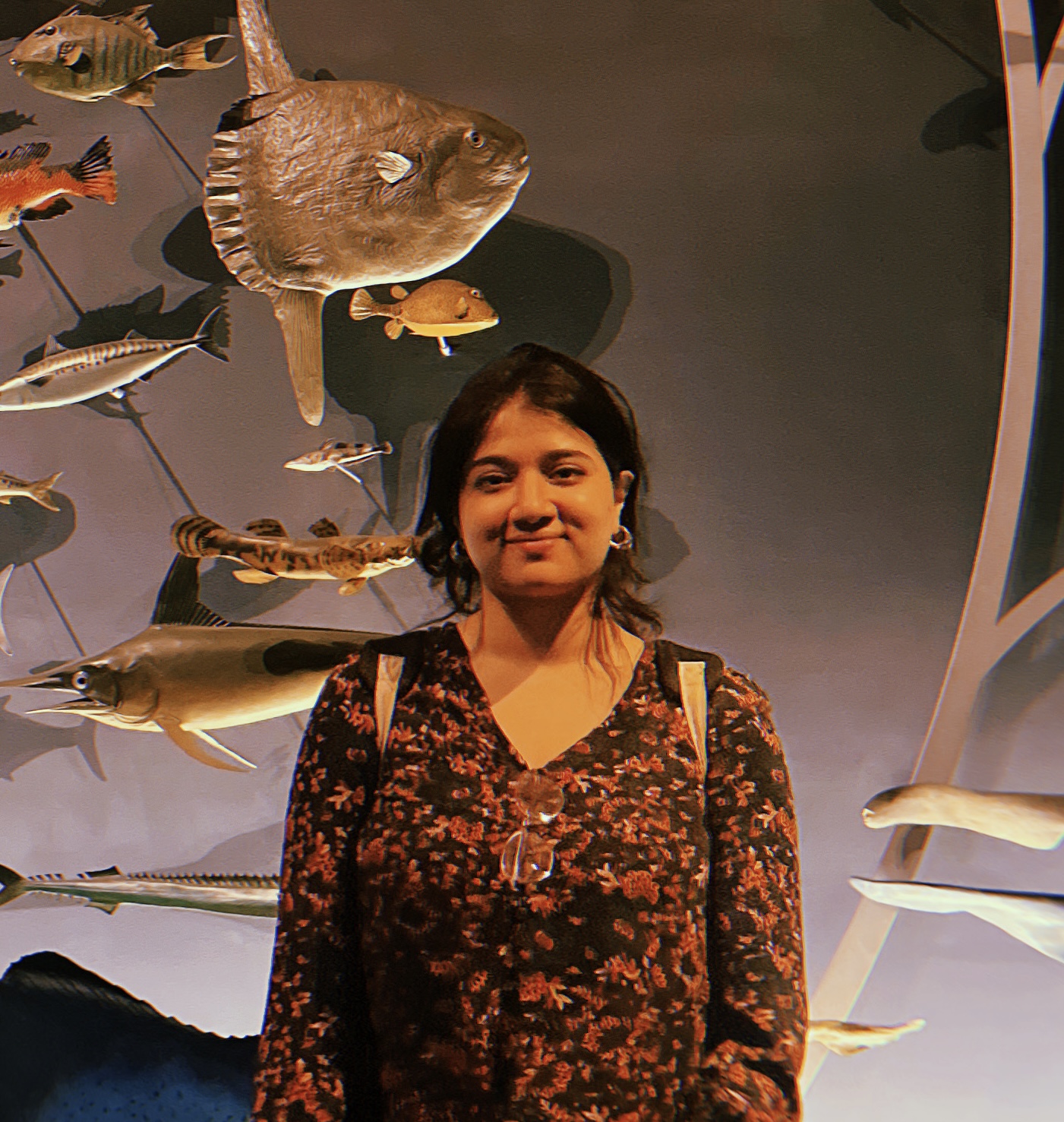
Sayoni Chatterjee
Sayoni Chatterjee is a PhD candidate in Evolutionary Developmental Biology at Rutgers University in the Nakamura Lab (Department of Genetics). Her research uses zebrafish to investigate how Hox gene networks pattern the vertebrate appendicular skeleton, with a particular focus on pectoral fin development, and the evolutionary origins of limb morphology. Combining CRISPR-based genetics, quantitative imaging, and comparative developmental analysis, her work asks how changes in regulatory architecture translate into structural novelty and constraint. Beyond experimental biology, Sayoni is deeply interested in cross-disciplinary questions at the interface of evolutionary theory and philosophy of science; especially issues of emergence, complexity, explanation, and how local molecular mechanisms scale into organism-level form. She is also committed to teaching and integrative scholarship, and brings a parallel background in Indian classical dance, music, and art, that informs her broader thinking about pattern, structure, and embodiment across domains.
“Burn Their Hides with Any Weapon that Comes Handy”: The Great Migration and Philadelphia Race Riot of 1918
The chapter centers the story of Adella Bond—a property-holding Black woman in South Philadelphia who used a gun to defend her home against a mob of white ethnic Philadelphians—to emphasize the connection between Black Philadelphians’ wartime migration to Northern cities and retaliatory white supremacist violence. Her choice to fire her weapon in defense of her property spurned a four-day-long riot against Black Philadelphia residents (July 26-29, 1918). Adella Bond stands out as a single Black woman homeowner and property-defender. Between 1910 and 1920, Black people represented less than 15 percent of property owners in the city. Though Adella Bond’s is not a shared experience for the majority of African Americans in Philadelphia, this chapter argues that the fight over her property became representative of the financial exploitation of and violence against Black homeowners and renters in Great War-era Philadelphia. This chapter also extracts the roots of self-defense and property accumulation from both northern and southern revolutionary traditions at specific moments during the nineteenth century. In the Northeast, free Black communities forged a tradition of armed resistance in response to targeted ethnic white violence in the 1830s and during the Civil War. Enslaved and free African Americans in the antebellum and Reconstruction South developed clear ideas about property ownership and self-protection against racist violence. These origin points demonstrate the ways in which Black men and women enacted ideas about property protection in Philadelphia during the early twentieth-century.
Sarah Coffman
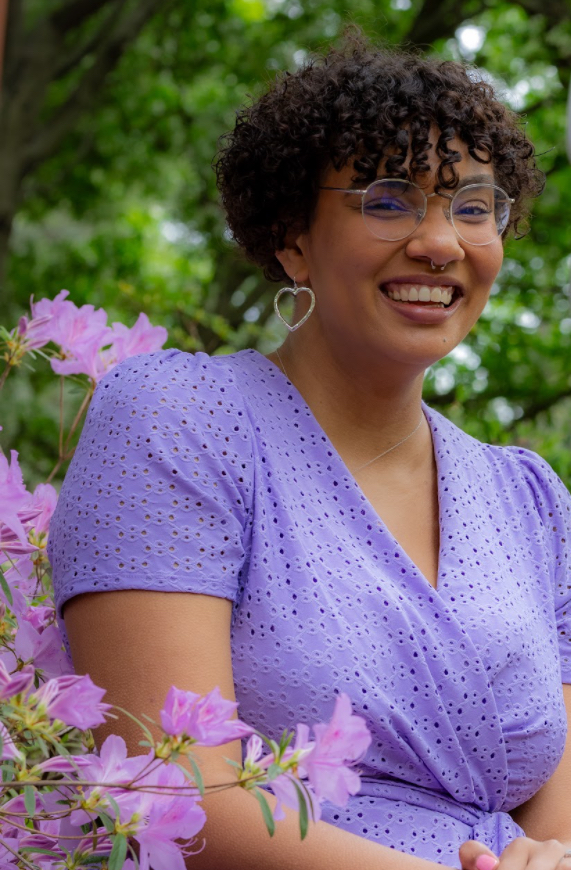
Sarah Coffman is a fifth-year PhD candidate focusing on twentieth century African American and urban history. She received her BA in History and African American studies from Lake Forest College in Lake Forest, Illinois in 2021. Her research examines how Black Philadelphians across property ownership categories—homeowners, renters, housing-insecure, and unhoused—navigated the violent constraints of urban real estate markets on a daily basis from World War I through the late 1970s. Within these stories, she is interested in the maintenance and persistence of segregation, racial capitalism in real estate, how gender impacts Black shelter seeking, and public health and environmental illness.
Targeting Mitochondrial Dynamics Against Acute Myeloid Leukemia
Feb 11, 2026 03:00 PM ET
Acute Myeloid Leukemia (AML) is an aggressive blood cancer that affects mostly adults, is difficult to treat, and has the highest death rates among leukemias. A current treatment option is a drug called Venetoclax, which targets an outer mitochondrial membrane protein, B-Cell Lymphoma 2 (BCL-2) that helps cancer cells survive. Venetoclax is a targeted therapy drug, that induces mitochondrial-mediated cell death. However, due to the therapy resistance and disease relapse in patients, the demand for developing stronger combinatorial therapies has increased.
Through my lab’s research, we discovered that targeting a protein involved in mitochondrial dynamics; the ability of mitochondria to fuse and fragment, can make AML cells much more sensitive to Venetoclax. In my animal studies involving human cell line and patient tissue transplantation in mice, we showed that a combination of inhibiting mitochondrial structural protein OPA1 and Venetoclax slowed the spread of leukemia and helped the animals survive longer. To build on this finding, we are in the process of conducting a CRISPR screen to search for other genes that AML cells rely on to resist treatment. Our goal is to discover new weaknesses in leukemia cells that can be targeted to develop more effective therapies for patients.
Saurav Doshi
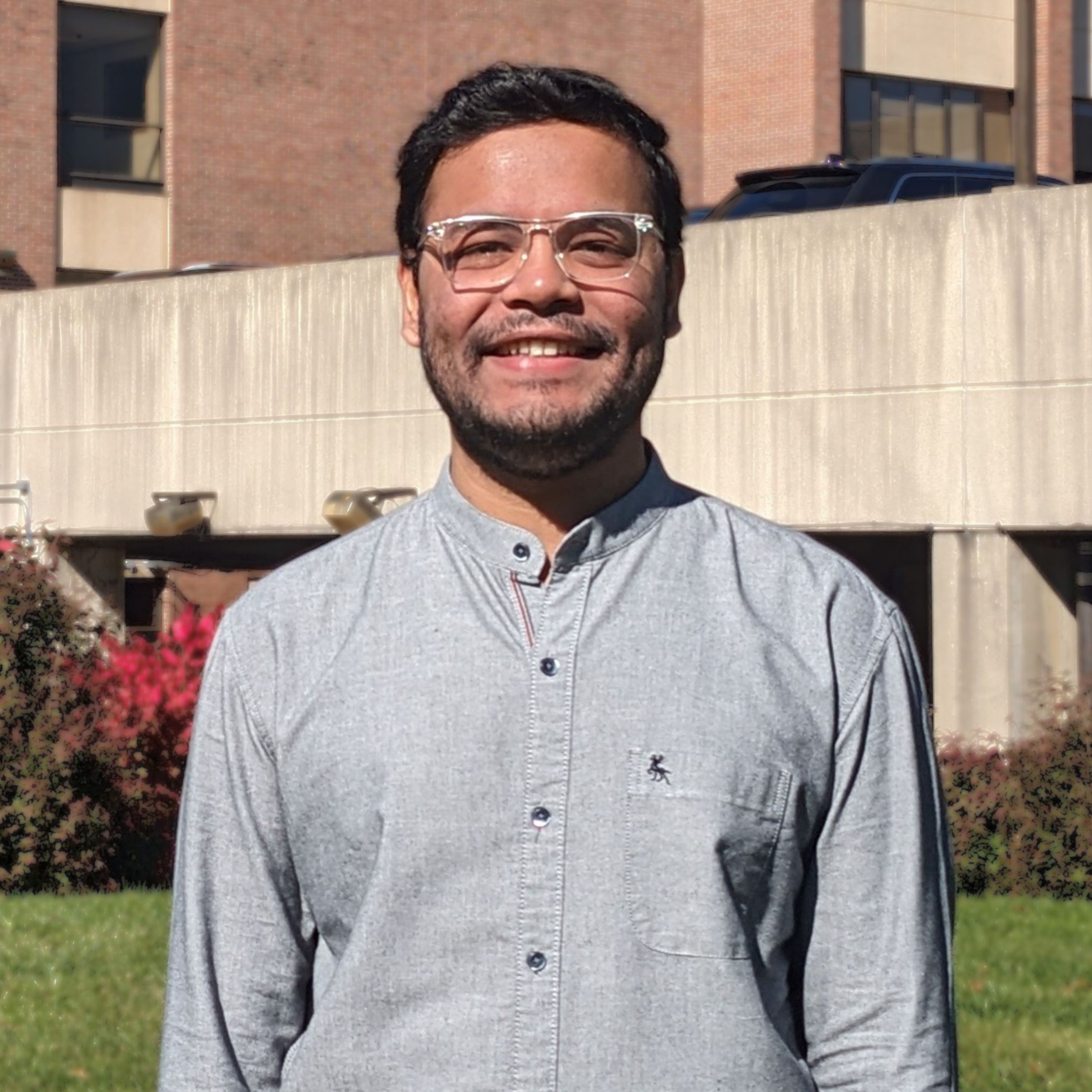
Saurav is a third year Ph.D. student from the Pharmaceutical Sciences Graduate Program, working under the mentorship of Dr. Christina Glytsou. While pursuing a five-year Integrated BS-MS degree in Biotechnology from Pune University in India, he explored the fields of breast cancer, melanoma and vaccine manufacturing through academic and industrial internships. This piqued his interest in drug discovery. In the Glytsou Lab, he is keen to work on developing novel therapeutics against AML in his doctoral studies. Aside from research, he enjoys Indian classical singing and latin dancing.
This month’s Research Café session features two thoughtful and timely graduate research projects that tackle big, real-world questions from very different but equally compelling angles. Jenny Mai explores how Asian Americans navigate the deeply personal and often difficult process of talking about mental health, while Prajwal Srinivas looks at how we can design smarter, more responsive AI systems that reason and remember more like people do. These talks highlight the impact of careful, human-centered research, whether it’s helping us better support one another or building technologies that can truly serve society.
Disclosures Strategies and Responses in Asian American Mental Health Narratives
Despite being the fastest growing racial group in the United States, Asian Americans and immigrants of Asian origin have the lowest help-seeking rates from support networks (family members, friends, romantic partners) and mental health services (healthcare providers and health organizations). The process of sharing mental health information is often the first step to acquiring help. Thus, this semi-structured interview study (N = 15) explores how Asian Americans with mental health conditions navigate initial and subsequent disclosures within their social networks. Results illustrate that multiple disclosure strategies were used, often shaped by the receiver's assessment, cultural stigma, and cultural norms. Theoretical and practical suggestions are discussed.
Jenny Mai

Jenny is a Ph.D. student studying Health Communication in the School of Communication and Information at Rutgers University. Her research examines how cultural determinants influence health decision-making processes in communicating mental and chronic illnesses and their effects on health outcomes. At Rutgers, she is a lab member of CommUnity Health Action Lab (CUHAL), focusing on how health is communicated and impacted throughout the lifespan. In the community, she is the Chinese American Mental Health Outreach Program Coordinator at the National Alliance on Mental Illness – New Jersey, helping the Chinese population get equitable and culturally appropriate mental health care.
Architecting an Agentic Mind: Proactive and Efficient Memory for Long-Term Reasoning in LLMs
Modern large language models (LLMs) are fundamentally limited by their finite context windows, which restrict their ability to maintain coherence and recall over long interactions. My research confronts this challenge by designing and evaluating a proactive, hierarchical memory system for LLMs. The proposed architecture combines short-term sliding window memory, episodic summarization, and a scalable vector-based long-term store, coordinated by an intelligent proactive retrieval agent. This system anticipates user needs, dynamically prioritizes information, and organizes memory for efficiency and minimal latency. Key objectives include developing dynamic salience scoring, benchmarking factual recall and multi-hop reasoning, and measuring qualitative factors such as coherence and user experience. The ultimate goal is to enable smaller, more accessible LLMs to achieve complex, multi-step reasoning typically restricted to large models. This project aims to advance the scalability and practical deployment of AI assistants for real-world applications in education, industry, and society.
Prajwal Srinivas

I am a graduate student in Computer Science at Rutgers University and serve as the co-founder and CTO of Beunec Technologies, where I lead the development of a real-time, AI-integrated cloud platform focused on user-centered innovation and secure, scalable systems. I also support the academic community as a teaching assistant at Rutgers. My technical background spans AI, backend development in Java and Python, and front-end technologies like React and Next.js. I am passionate about enhancing the impact of technology on real-world problems, with work centered on intelligent cloud solutions and AI applications. Through teaching and collaborative leadership, I strive to bridge academic excellence and practical innovation in computer science.