By Andrew Ramirez
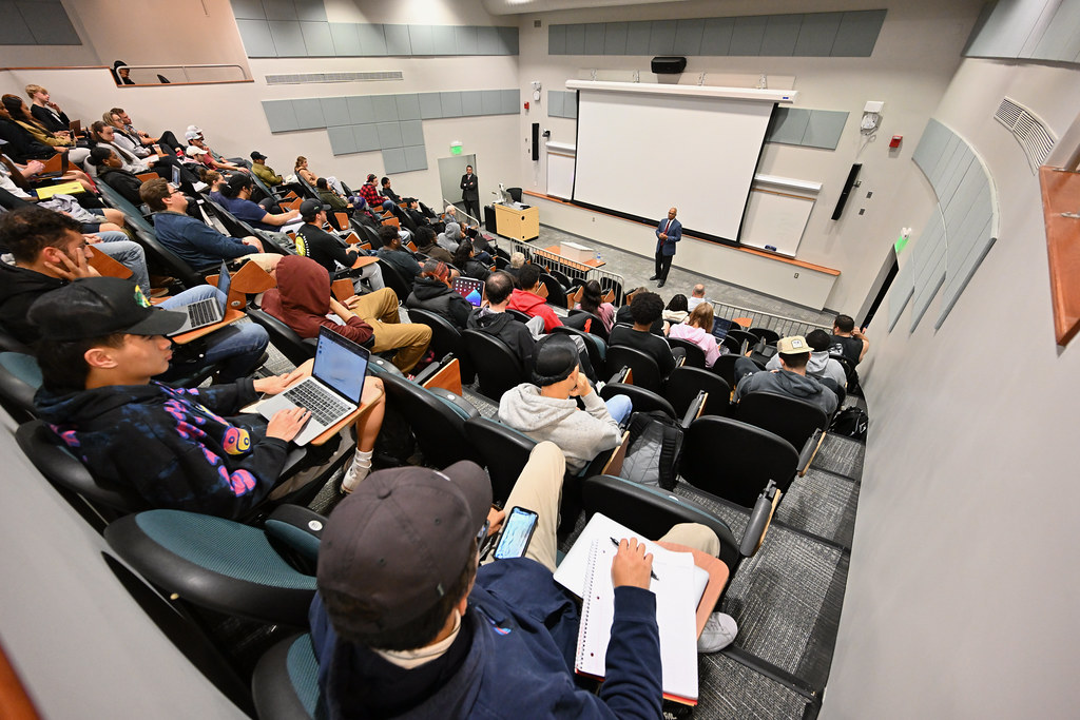
On July 23rd, the Rutgers iJOBS program hosted a career panel that discussed critical steps graduate students and postdoctoral researchers can take to adequately prepare for a teaching career, apply to teaching-intensive faculty roles, succeed in the interview process, and thrive once a position has been obtained. The panel was made up of faculty with diverse academic backgrounds, teaching, and research experiences. These faculty teach at a wide array of institutions, ranging from R1 research universities to liberal arts colleges. The panel consisted of the following professors: Denver Baptiste (Stevens Institute of Technology), Tara Cominski (Rutgers University-New Brunswick), Igor Ivanovsky (St. Joseph’s University), Isabella Maita (UC San Diego), Xue Mei (St. John’s University), Alexandra Nowlan (University of North Carolina, Chapel Hill), and Samantha Schlachter (Rutgers University-New Brunswick).
The iJOBS event began with a brief outline of the career panel. Rather than asking a question and allowing each participant to respond, panelists were assigned to give a brief overview of the following four areas: preparation before applying, actively applying, preparation for the interview, and management and success in the role.
Preparation before applying
1. Teaching vs. research-intensive
Dr. Baptiste began describing how to choose between a teaching-intensive and research-intensive role. The main prompt he recommended was to ask yourself and reflect on the question “What excites you the most - mentoring students or driving discovery through research?” Depending on your answer, this can shift the type of positions you apply to, changing the percentage of teaching and research amount you would like to have for your future role. Additionally, he recommended being involved with programs that could provide teaching opportunities during graduate school such as being a teaching assistant for a course, managing a team of undergraduate researchers, or formal pedagogical training to obtain a wide range of experiences to see what you enjoy doing more. One example mentioned included the NSF Alliances for Graduate Education and the Professoriate (AGEP) program which was unfortunately terminated recently.
2. How to select a postdoc that will eventually help you land an academic career
Dr. Nowlan discussed choosing a postdoctoral or graduate advisor that is supportive of pursuing alternative career paths other than research. She emphasized how crucial it is to be communicative and transparent with a future advisor about career goals, as the advisor could accommodate the role to include more teaching-related opportunities. However, she did highlight that not all advisors will be supportive, and that identifying other mentors who would support teaching endeavors is an option as well.
Moreover, Dr. Nowlan suggested choosing a research project that lends itself well to create mini projects that undergraduates could work on based on their knowledge, career stage, and time limitations. In addition to mentoring experiences, she recommended obtaining teaching opportunities such as teaching assistantships, guest lecturing, co-teaching, and even being an instructor of record for a course. Being the official instructor of a course was noted as extremely valuable for teaching-heavy roles as it demonstrates full understanding of all the duties a professor has. For more organized pedagogical training during a postdoc, postdoctoral fellowships with a teaching and research component include Institutional Research and Academic Career Development Award (IRACDA); Rutgers is one of the universities that hosts this fellowship program. National organizations provide pedagogical training including the Center for the Integration of Research, Teaching & Learning (CIRTL) and local communities such as the Institute for Teaching, Innovation, & Inclusive Pedagogy (TIIP) at Rutgers.
3. What other things you should be doing during your postdoc to be ready to apply for faculty jobs
Apart from research mentorship and teaching experience, volunteer and service roles are valued as employers want to see how you invest in your community. Additionally, teaching opportunities and mentorship don’t necessarily need to occur in the lab or at your university. Dr. Mei and other panelists suggested becoming involved with your local community such as STEM Grads Giving Back, Students 2 Science, or guest lecturing at a local K-12 school. Other volunteering opportunities include serving on a committee for a teaching-focused conference or serving as a mentor to new graduate students or postdocs.
4. Finding academic jobs to apply to
To identify which faculty roles to apply to, Dr. Baptiste first suggested reflecting on the type of institution that the applicant is most interested in. This includes the research or teaching focus of the university (e.g. R1, R2, liberal arts college). He also highlighted identifying roles that fit your research and educational training but also ensuring you are applying to a broad range of roles at diverse departments that fit your background. He recommended applying to faculty positions even if the alignment didn’t seem perfect.
As for locating application positions, Dr. Baptiste emphasized investigating the career pages of universities that are of interest. For a broader search, general websites that include faculty roles across fields include Inside Higher Ed, Chronicles of Higher Education, and Science Careers. More discipline-specific websites can be used, such as the Faculty for Undergraduate Neuroscience or the Society for Biology Education.
5. Networking
Dr. Cominski recommended joining communities related to teaching and pedagogy, as these relationships would be pivotal for identifying professorships, serving as references, or connecting you with a peer/colleague. These communities could be workshops or trainings involving creating syllabi, course development, or regulating AI in the classroom. Other ways to connect with current faculty include joining service committees, senate work, or scientific conferences hosted by education focused organizations. Involvement could be at the department, university, regional, or national level. These include American Society for Engineering Education (ASEE), American Educational Research Association (AERA), or the National Institute on Scientific Teaching (NIST), for example.
Research collaborations serve as an alternative option to connecting with colleagues and are a great way to communicate what you would like to pursue in the future. Finally, Dr. Cominski mentioned asking your community if there are opportunities to shadow faculty members to build a connection or connect with people online through LinkedIn.
Actively applying
6. Preparing the research statement
The research statement required for teaching-intensive faculty positions describes your research trajectory as a scholar, highlighting growth: from where you began to where you envision going in the next few years. This includes highlighting research conducted during your PhD and postdoc. Dr. Ivanovsky recommended outlining the specific goals that you would like to accomplish at the potential university, shedding light on projects with various timelines that reflect your experience. He emphasized that the research proposal should align with the university’s infrastructure and research capacity. For example, a research project that would require a PhD student to complete over 5 years or a projects requiring extensive resources, specialized facilities, or large research teams may not be feasible at primarily undergraduate institutions. Research projects that are affordable, can be completed over a short time span, are exciting for undergraduates, and suitable for students with little to no experience are more in demand for universities without large research budgets.
Additionally, Dr. Ivanovsky mentioned that you should have experience mentoring undergraduate students. Being involved in Course-Based Undergraduate Research Experience (CURE) projects, which lets entire classes of students work on academic research, is a great way to research mentorship and excellence. Similarly, evidence of technical and communication skills that would be gained by students involved in your potential lab that are relevant to the current industry market and potential graduate schools are heavily weighted in the statement.
7. Preparing the teaching statement
The main purpose of the teaching statement is to explain your classroom goals, teaching methods, and proof of student learning. Dr. Nowlan emphasized writing about your core values on teaching, how you view learning overall, how you accomplish and evaluate successful teaching, and how you measure mastery of a subject. She also suggested adding how you plan to improve as an instructor over time. Furthermore, she mentioned these other questions that may be addressed in the statement:
- Describe how you implement active-learning methods in your class?
- How do you make your classroom inclusive for diverse and neurodivergent learners?
- What type of assessments do you use? What percentage are exams of the total grade?
- How do you plan to improve your pedagogy?
- Do you integrate student feedback in your classroom?
- Will you use AI in your classroom? Why or why not?
- What classes could you teach at the university?
- What courses could you create based on your unique background?
The last key point stressed was to discuss these questions and topics in terms of what you have done already. Thus, if you don’t have much teaching experience, think about experiences that could help address these points. Evidence informs how you will teach in the future.
Preparation for the interview
8. Preparing the job talk
For most teaching-intensive faculty interviews, a job talk will consist of either a research-focused talk, a teaching demonstration, or possibly a combination of both. Dr. Maita broke down the emphasis of each type further. For a research-focused talk, she explained that the main focus of this presentation is to communicate your past research accomplishments, prove your future scholarly potential, and demonstrate your unique fit for the hiring department. Typically for a teaching demonstration, a topic will be sent to the applicant before the interview to structure the presentation around a lesson where you showcase your instructional style. As for the audience for both talks, it usually is made up of the interview panel (deans, faculty members, and staff who “act” as students) and current students at the university. For the combined talk, the interview panel will want to see how you can integrate active learning methods into a research talk for a general audience.
Dr. Maita recounted that both types of talks are meant to show your fit at the university, your communication skills, pedagogy implementation, and show what your classroom will be like. She mentioned that it is crucial to take into account the audience of the presentation, as it might change depending on who you are addressing. And for both talks, anticipate a Q&A section. She concluded by saying “practice as much as you can and expect questions, as the interviewers will want to see how you think on the fly.”
9. Preparing the chalk talk
A chalk talk is a research talk or teaching session in which the speaker writes or draws on a blackboard or whiteboard in real-time, typically without using pre-made digital slides. This could be about the research proposal, a course proposal, or different initiative you would like to create at the potential university. Dr. Maita highlighted that this is not as common as a job talk. Similarly to the job talk, you will be instructed ahead of time if a chalk talk is conducted during the interview. She recommended to prepare in advance as you won’t have any slides to refer to. An overall outline and flow of the chalk talk will be instrumental, along with the timelines of the project. She finally highlighted that the chalk talk is heavily interactive, and you should anticipate interruptions.
10. Preparing for the interview itself and tips
As for the interview process, the interview committee could consist of the dean, department chair, faculty members, staff members, and students of the department. Dr. Cominski then broke down the overall structure of these interviews. During the interview, meetings with individuals or several members will occur throughout the interview day(s) through formal meetings, lunches/dinners, and casual conversations throughout the day. She recommended researching the institution ahead of time to prepare for these discussions. Below are some topics to think about in the preparation process:
- Who are the people you will be interviewed by? What courses or research do they teach?
- What are the current initiatives of the department?
- Who could serve as a mentor if you were to join as a faculty member?
- What are the concerns students have in the department?
Although many questions will be asked by you, the interview committee will most likely be asking questions such as the following:
- Which specific courses from our catalog are you prepared to teach right away?
- What new course would you want to design and introduce to our department?
- How do you engage students, especially in large lecture halls or non-major courses?
The last piece of advice that was given included being honest and thoughtful throughout the interview process. In the questions you ask, the conversations you will have with various people, including students, and how you respond to questions. The interview days are long, so do your best to be an active and thoughtful listener.
11. Negotiating offers
Negotiation for a teaching-heavy position is the process of discussing and agreeing on employment terms like salary, teaching load, priority on courses, and start-up funds, typically after you have received an official offer. Dr. Ivanovsky recommended doing research before the interview to know what the salary range is for that position; this depends on the location, institution, ranking, and department. Certain job websites will show the salary ranges. As for making the actual negotiation offer, he recommended being firm in your tone and confident when asking and doing so while highlighting your strengths and accomplishments that contribute to that salary ask. These could conclude previous current or future contributions, such as student success, curriculum proposals, research production, community engagement, or program growth. He concluded by saying that although they may not be able to provide you with a higher salary, you could ask for other financial benefits including relocation assistance, more startup funds, office space, and course choices.
Management and success in the role
12. Setting up the lab
For those setting up a physical laboratory space, this will be a whole new endeavor. Dr. Ivanovsky recommended pursuing the following steps to ensure the budget is maximized and time is not wasted:
- Take inventory to avoid double purchasing equipment you have already
- Ask colleagues for Standard Operating Procedures, lab notebooks, common equipment (beakers, pipette tips, etc.), protocols for bringing on undergraduates, and if you can share lab equipment
Dr. Ivanovsky highlighted that certain budgets would have a strict, short timeline whereas others may have five or more years to spend on laboratory equipment. For those in the latter case, leaving room to purchase equipment, repair fees, and unexpected expenses was advised.
13. Filling your lab with students, postdocs and techs
Other than the budget, recruitment to join your laboratory group is another large aspect of leading a successful research team. Dr. Mei proposed recruiting students through classes, making postings through your lab website, and being open to pivoted research projects based on interest, even if it is outside your expertise. She suggested having a protocol on how you hire people to join the lab. This could include a formal interview process, timeline in the lab, and class requirements.
Dr. Mei reflected on her experience managing and mentoring students, and she mentioned how slow projects could be at first, and how progress might take time to build in a new lab. She recommended training multiple people at the same time and pairing people together to maximize your time.
14. Teaching for the first time and preparing classes
Teaching a class for the first time, especially a course that you didn’t take as a student, can feel daunting. Dr. Cominski discussed that reaching out to faculty members who have taught the class before at your department or other universities can serve as a resource or outline to refer to when creating your class. However, it was emphasized to ensure that your class is mostly made of materials of your own, as it is hard to shift your teaching to style to someone else's. She recommended starting as early as possible so that less time during the quarter/semester is spent creating materials. The last suggestion was to keep the students in mind during the process of creating the class. Do the students know this information from a prior class? Is the content too advanced for them? Is the course for majors or non-majors?
15. Service to the school
Service signals institutional commitment and that you're invested in the community, not just your lab. Service is a large percentage of a teaching-intensive role and at each institution, the percentage of service will change compared to the teaching and research percentage. Service as a faculty member could be being a graduate student committee member, mentor for a capstone project, research mentor for a summer research program, student advisor, departmental committee member, or member for curriculum design. Dr. Baptiste highlighted that service is an instrumental part of the tenure package and leadership roles differentiate you from your peers.
16. Preparing for tenure and expectations
Tenure for a professor is long-term employment protection, allowing for exploration of risky projects and ideas. Dr. Schlachter sectioned the tenure-application process into three main sections. The first section includes the “dating” phase (years one to three), where you are finding your footing, getting involved with committees, starting research projects, and applying to grants. After the first three years, some institutions conduct a midpoint review which includes a mini-tenure application process. This involves submitting evidence showcasing elements of teaching, service, and scholarship. The next phase, as described by Dr. Schlachter, is the “getting engaged” phase. Around years four and five, you are addressing any concerns brought up in the mid-point review, gaining leadership roles, increasing your mentorship capacity, and increasing your portfolio in the three main aspects of the tenure package. She emphasized that continued evidence is key during these years! The last section described by Dr. Schlachter is the “getting married” stage, where you prepare your tenure package and draft a narrative piece and organize all your accomplishments.
Q&A Section
At the end of an extensive career panel that went over the research-intensive application process and position success, the panelist answered questions from the iJOBS audience.
- Q1: How do you use AI in the classroom?
- A1: Dr. Nowlan was initially apprehensive at the beginning but began integrating AI in the classroom using an in-class assignment where students propose follow up experiments to a research study and compare that to an AI response.
- Q2: How do you gauge which research projects would be interesting for undergraduates?
- A2: Dr. Cominski explained that students usually enjoy projects that use topics from their courses.
- Q3: What are hiring committees looking for in reference letters?
- A3: Dr. Nowlan mentioned that reference letters should highlight how valuable a person is in their current team, that they are a good colleague, and are instrumental in the success of the lab/department.
- Q4: How does your current research differ from when you were a grad student or postdoc?
- A4: Dr. Mei discussed how her current research uses the techniques and skills built during her PhD and postdoc training, but that she pivoted based on the resources at the university and the interests of the students.
Overall summary
This faculty job panel was an extremely useful event for those considering a teaching-heavy role. The event ranged from the preparation as a graduate student and postdoc to succeeding in the position itself. This structure of the event was useful for those barely considering a teaching-intensive role to those currently applying. Although there were many aspects of the application process discussed at the event, the event was informative to those with minimal and extensive teaching and mentorship experience. For those with less pedagogical training, there was practical advice sprinkled throughout the event, along with tangible opportunities to gain more experience. This was useful for those who may want to pursue a research-intensive role as well, as it highlights the experiences and passions needed for an individual to apply to teaching-intensive positions.
This article was edited by Junior Editor Anna Tassou and Senior Editor Joycelyn Radeny.