By Antonia Kaz
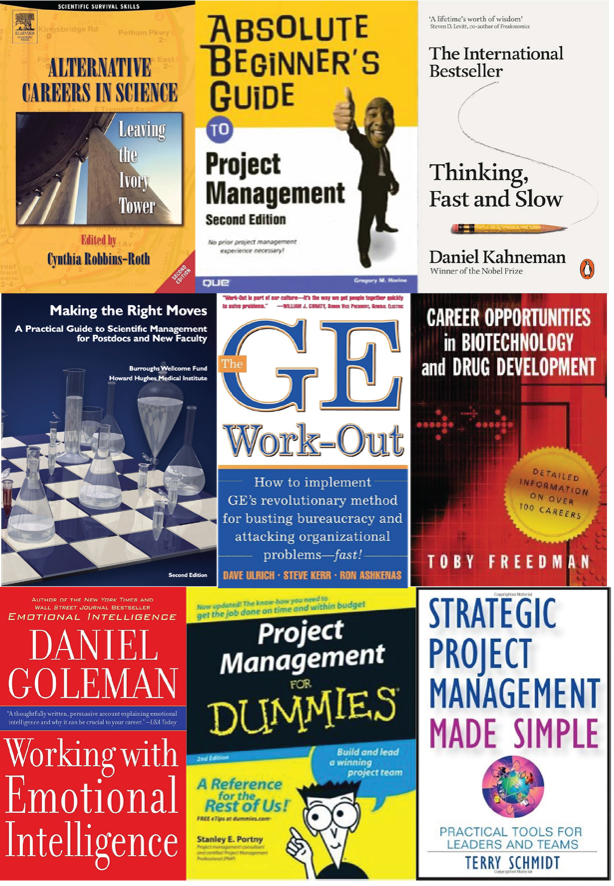
As I wrap up my fourth year of graduate school, with hopefully one more year to go, the once elusive idea of completing my PhD has become a concrete list of to-dos and an end date in sight. I have accomplished many of my goals as a graduate student, and I am starting to feel both the pressure and the excitement of moving into the next phase of my career. Fortunately, SciPhD came at the perfect time. The iJOBS SciPhD workshop is a three-day, in-person event focusing on the business of science, networking, science communication, interviewing, industry positions, job applications, financial literacy, and more. It combines lectures, discussions, and interactive activities led by SciPhD leadership, including Dr. Randall (Randy) Ribaudo and Larry Petcovic. Beyond being informative, it was genuinely fun. I worked with friends from other departments and made new ones while collaborating during team-based activities.
If you are just learning about SciPhD from this blog post, keep an eye out for this event next year. If you have seen it on the iJOBS listserv but have not attended, I hope this post encourages you to go next year. And if you will not be able to attend during your graduate degree or post-doctoral fellowship, the rest of this blog post covers key takeaways about applying for industry positions.
The Business of Science
Industry science operates under two core principles: 1) make a profit and 2) continuously improve. Successful companies rely on a team of individuals with business and/or technical expertise. As PhD students and post-docs, we focus on developing our technical skills, but we often exercise business skills while working on highly technical projects.
To compete for industry roles, we need to convince a hiring manager that we have the same skills as industry professionals. This is done by communicating “what you do” (your technical identity), “how you do it” (your business identity), and “how you interact with others” (your social identity). Publications, presentations, training, and references define what you do.
Teamwork, creativity, problem-solving, planning, design, and execution define how you do it and how you interact with others. Translating academic
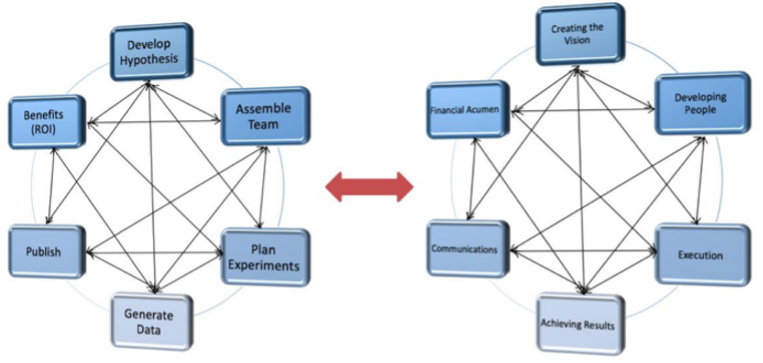
achievement into business-relevant language is essential. This diagram highlights how each aspect of academic projects can be rephrased.
Each job requires a distinct mix of technical and business skills. Rather than submitting the same resume to every application, SciPhD offers a job analytics platform, Flamingo, to help tailor your resume to each job application. Flamingo helps users identify skill gaps, align resumes with job requirements, and target applications more effectively. By participating in the SciPhD program, you get to use Flamingo for free!
Most hiring decisions fail not because of missing technical skills, but because of poor attitude. That is why it is critical to pursue roles that align with your skills, interests, and values. If you are unsure which roles to pursue, tools like MyIDPoffer free career-planning to guide your search.
Networking
Your network consists of people who can advocate for you from your current job, previous job, social contacts, and current or former university. They may not offer you a job, but you may learn about unadvertised positions, gain insight into a potential interviewer, or get your resume to the hiring manager.
You should be building your network all the time— at scientific, business, and social events, and with vendors and alumnae. Try breaking the ice with topics
that are relevant to both of you, such as the weather and the event you are attending. If you already know about the person, ask a question relevant to their research or their opinion on a mutual field of interest. If you are communicating in person, your goal is to exchange business cards (yes, you should have one). Once you receive their business card, write a note on the back with the information you learned. Then, you follow up via email, address what you learned, and ask to connect on LinkedIn. When you connect via LinkedIn, include how you met in your message so you can refer to it later.
Introverts and extroverts can showcase different strengths when networking:
|
Extroverts |
Introverts |
|
Initiate conversations |
Plan conversations |
|
Give long answers |
Give short answers |
|
Verbal preference |
Written preference |
|
Contact anyone anytime |
Contact as needed |
|
Excitement obvious |
Excitement earned |
|
Generally: large network of shallow relationships |
Generally: small network of deep relationships |
If you also need motivation to update your LinkedIn account, consider:
- Nearly 90% of recruiters use LinkedIn to identify and evaluate candidates.
- It enables remote networking and informational interviews.
- It helps you learn about companies and roles.
- It increases the chance of reaching a hiring manager through mutual connections.
Successful Communication as a Scientist
Communication consistently ranks among the top five required competencies for success in industry, according to leadership and job performance analyses. SciPhD emphasized four communication competency levels: technical literacy, emotional intelligence, social intelligence, and style flexibility. We practiced explaining our research using the most technical and least technical terms to understand how to tailor scientific explanations to different audiences. For example:
Technical audience: My research is focused on the surface antimicrobial activity of a hydroethanolic Quercus infectoria gall extract and its bioactive compounds, hydrolyzable tannins, on abiotic and biotic surfaces using a novel antimicrobial screen.
Highly non-technical audience (7 words maximum): How a plant extract kills surface bacteria.
Interestingly, the person with the most complex, highly technical description also wrote the best non-technical description.
Effective communication also requires a combination of emotional and social intelligence. Emotional intelligence involves taking responsibility for your own emotional state during communication. Social intelligence involves communicating in a way that relates to your audience’s needs and interests while actively seeking a shared purpose.
In Daniel Kahneman’s “Thinking, Fast and Slow,” he introduces a two-step method to transition from “automatic” emotional responses to controlled responses adapted to the social environment. Slowing down your thinking can be as simple as asking yourself Why Am I Talking (WAIT)? We also discussed “expert” and “learner” roles during our conversations (see table below). You will need to determine when to use each role, and you should always adjust your communication style rather than expecting others to adjust theirs.
|
Expert |
Learner |
|
Focus on self |
Focus on others |
|
Find mistakes |
Find common ground |
|
Give answers/TELL |
Ask questions/LEARN |
|
Reinforce expertise |
Reinforce relationship |
|
When stressed: get frustrated or defensive |
When stressed: reinforces common agreements and offers to continue conversation |
Interviewing
“The best predictor of future performance is past performance.” -- Randy
At the end of each day, we were given a list of standard interview questions to answer with a partner. Interviews typically include theoretical and behavioral questions. You will use examples from prior experiences in discussions with interviewers, such as How do you hand an experiment that doesn’t work? (theoretical) or Tell me about a time someone really got you upset (behavioral). Your goal is to win over every person in the interview (even if that is not possible). One way to increase the likelihood of providing an answer that the interviewers are looking for is to ask a question from the learner’s role. When possible, demonstrate how your experiences or research relates to their science. Below is a list of questions you should be prepared to receive:
- Why should we hire you?
- How do you use AI?
- What is your greatest weakness?
- Do you have any questions?
You should always have a question for your interviewers—do your homework on the company! You can always confirm the salary range from Glassdoor or refer to current news, their science, strategic partners, products, and services, etc. AI is an excellent resource for gathering background information about a company, but you need to include appropriate guardrails in the prompt and double-check the sources. You may also use LinkedIn to research interviewers and find their publication list.
Financial Literacy
A certain level of financial literacy is expected within industry positions. There are three key financial reports to know: income statements, balance sheets, and cash flow statements. Income statements, or a profit and loss report, answer the question of “is the company profitable over a month, quarter, or year?” It is the net income after expenses and revenues. A balance sheet following Generally Accepted Accounting Principles is valid for one point in time. It answers the question: “How does the company generate equity for the owners and shareholders?” or the owner’s equity after assets and liabilities. A cash flow statement answers the question of “how does the company acquire and spend its cash?” It is the sum of the operations, investments, and financial activities.
You should also understand metrics like net income (after taxes each fiscal year) and EBITDA (earnings before taxes, interest, depreciation, and amortization). The value of a company is the product of its EBITDA and the market it operates in. A more profitable market will increase the EBITDA and, thus, the company's value. We ended the SciPhD event with a financial exercise in which teams represented funding organizations and companies seeking funding. I was part of a non-profit organization with $70 million to spend on science products and services that save lives worldwide. I needed to target each company and communicate with them to determine whether their goals align with ours. This experience introduced me to a new career path and reinforced the importance of communication and financial reasoning.
Testimonials from attendees
What aspects of the workshop did you enjoy the most?
“The entire learning process from day 1 starting with creating a company with a product in mind and then reaching out to potential investors for raising money for the same [company] on day 3 was amazing.”
“I enjoyed the pace of the workshop. The information was intermixed with worksheets and group exercises, which made the session feel shorter and more interesting. I also very much enjoyed the information presented. I am now considering a career path I had not previously been aware of, and I am very grateful.”
“The hands-on learning exercises were my favorite part.”
Participating in SciPhD reshaped how I think about transitioning from academia to industry. It emphasized the importance of communication, business acumen, and networking in industry. Whether you attend SciPhD or pursue these lessons independently (take a look at the book recommendations above), investing time in translating your academic experience into industry-relevant value can dramatically strengthen your job search. These skills are discussed in other iJOBS events, so be on the lookout for events relevant to your career journey.
This article was edited by Junior Editor Janaina Cruz Pereira and Senior Editor Joycelyn Radeny.