By Jaeyong Jung
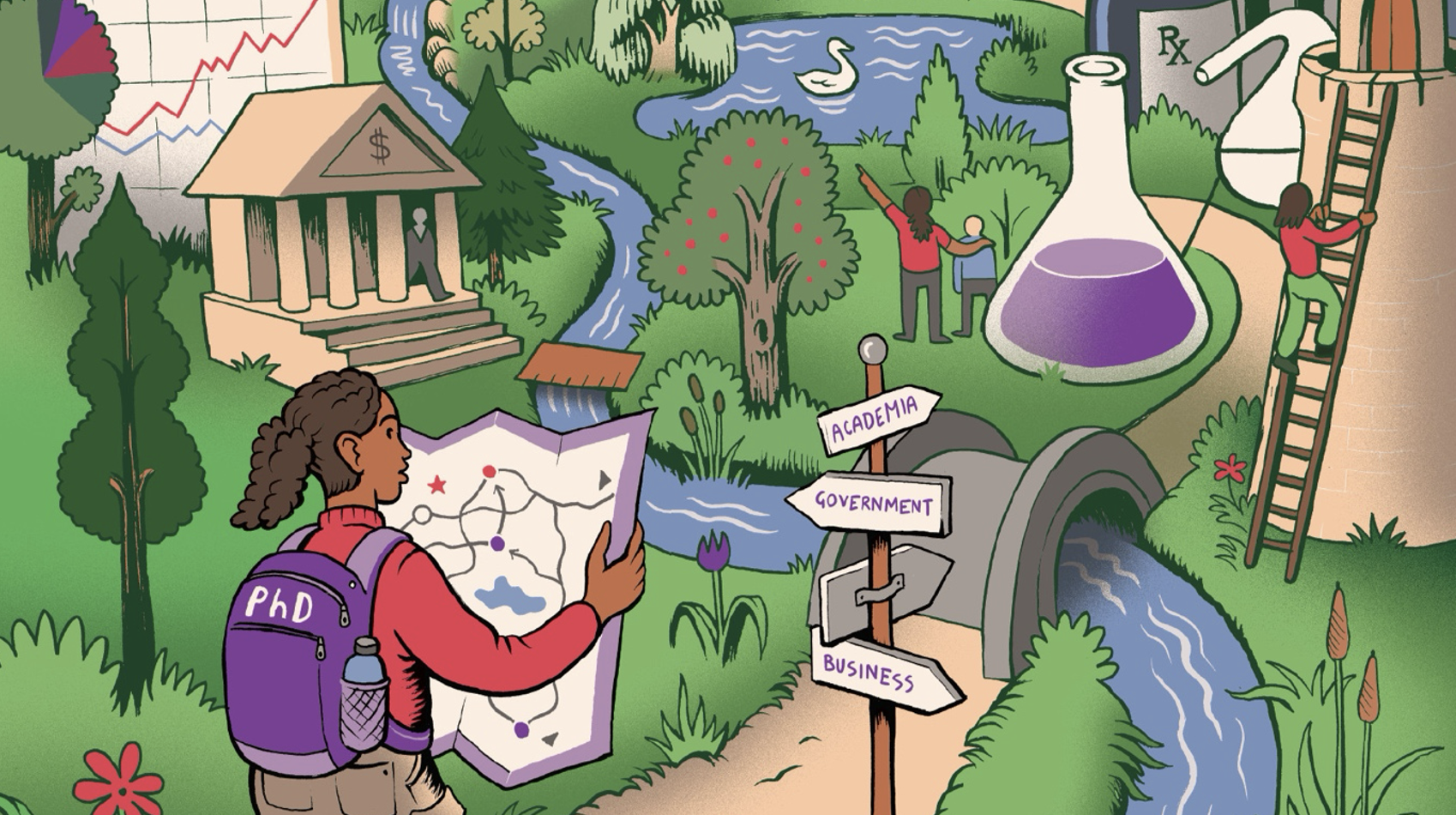
The What Can You Be With a PhD (WCUB) symposium is the largest biomedical science career symposium for PhD students and postdocs, held biannually by the NYU Grossman School of Medicine and partnering institutions, including Rutgers University. This was the first in-person WCUB symposium since the COVID-19 pandemic, featuring over 100 speakers and career panelists from diverse fields, career coaching sessions, and professional headshots for aspiring biomedical scientists. The first day offered a wide range of career panels and activities for PhD students and postdocs exploring their next career steps, such as paths in non-profits, science communication, bench research, and academia. In addition to these career panels, numerous workshops led by recruiters and career coaches offered more personalized guidance for participants. This iJOBS blog post is the first in a two-part series covering WCUB 2025 and highlights the first day of the event.
Workshop: What recruiters wish you knew
The event kicked off with the career development workshop What Recruiters Wish You Knew, facilitated by recruiters from three different fields: medical communications, clinical science, and finance. The workshop was structured as a Q&A session offering valuable insights into recruiting and hiring from a recruiter’s perspective and highlighted key points for standing out as a candidate.
Daniel Kiely, Vice President of Talent Acquisition at Healthcare Consultancy Group, discussed the importance of making a strong case for yourself by clearly asserting how your passion for the role aligns with your core research skills. Marge Musumeci, Manager of Talent Acquisition at Pfizer, pointed out that candidates should create their own network tailored to a specific position and company. Finally, Kim Freehill, a Senior Executive Recruiter at FSJ Partners, stressed the importance of “doing your homework” to fully understand the position you are applying for. As emphasized by all three professionals, how much a candidate understands the role they are applying to often reflects how effective they may be in the role.
“Resume is an expensive real estate” – Diane A. Safer (Moderator)
Resumes should be very concise—no more than 2 pages—as recruiters only spend 2-3 minutes reviewing each resume. Marge Musumeci shared that when she receives more than 100 resumes for a position, she reads the first 20 or 30 and picks a few that match the job criteria. If the hiring manager or upper management cannot find a sufficient candidate from the first few selected, she returns to the original pile of resumes.
This highlights the importance of applying early and highlighting your key skills to catch the recruiter’s eye or, at times, the Applicant Tracking System. To determine which key skills to emphasize, start by looking at the key points listed in the job description.
Career Panel: Careers in science communication and media
During the Career Panel: Science Communications and Media, four professionals shared their journeys and insights into building a career in science communication—a field that bridges the gap between scientific research and the public.
Chris Gilbert, a Medical Affairs and Scientific Communications Fellow at Boehringer Ingelheim, talked about his lifelong passion for “distilling complex scientific information” for others. Other panelists, such as Paula Croxson, President of Stellate Communications, chimed in, adding that she also felt a personal connection when her work resonates with someone. The panelists unanimously agreed that having a genuine passion for facilitating communications and enjoying the interpersonal interactions with key opinion leaders and stakeholders is crucial for success.
Questions about mentoring and networking also came up during the career panel. Paula Croxson strongly emphasized the importance of informational interviews built on “non-transactional interactions.” Rather than solely reaching out to people with the intent of getting hired, she encouraged attendees to show genuine interest and authenticity to learn more about the field you seek employment in. Olipriya Das, Vice President of Russo Partners, advised attendees not to be afraid of following up with unresponsive networking requests or cold LinkedIn messages for informational interviews. After all, what’s the worst thing that could happen? Reconnecting with professionals multiple times helps to forge new relationships that can help you immensely in the future.
Overall, the first day of WCUB 2025 was filled with exciting career panels, networking, and workshops. The event venue also had various roundtables and coffee sessions to facilitate networking. Personally, I found connecting with peers and professionals working in different fields to be a particularly valuable experience. Stay tuned for the iJOBS blog post covering the second day of WCUB PhD 2025.
This article was edited by Junior Editor Janaina Cruz Pereira and Senior Editor Antonia Kaz.