iJOBS and Eagleton: Science Policy Career Panel
iJOBS Blog
By Joshua Stuckey
By Joshua Stuckey
By: Samantha Avina On Friday February 21st the Rutgers Eagleton Institute of Politics in collaboration with the Rutgers iJobs program hosted the CRISPR Governance Workshop to discuss the current issues in developing policy to regulate genome editing. The objective of this workshop was to encourage open discussion about the use of genome editing technologies and give students insight into potential careers in science policy.
Author: Brian Canter “Better outcomes for new methods will lead to more trust of new institutions.” This was my major takeaway from hearing Beth Noveck speak in November at the Eagleton Institute of Politics. The event was part of the Eagleton Science and Politics Initiative and was titled Where Science, Innovation and Civic Engagement Meet. Dr.
By Brian Canter Scientists have recently felt pressure from partisan attacks on government science funding agencies. Yet many of these same agencies have received funding boosts in the past two years. The public is supportive of basic research, but sometimes questions the motivations and interests of scientists, due to a general disconnect between the two communities.
By Huri Mücahit In the proposed budget for the 2020 fiscal year, President Trump has pushed for budget cuts to several science agencies, including the National Institute of Health (NIH), National Science Foundation (NSF), and the Environmental Protection Agency (EPA), as well as cuts to Medicaid and Medicare. The cuts proposed within “A Budget For A Greater America” are aimed to reduce the national deficit of $608 million (Budget of the U.S.
By Vicky Kanta At every career development event, PhD students and postdocs are reminded of how valuable their training is, even outside the scope of academic careers. Presenting in front of large audiences and summarizing complicated topics in a short time are some of the so-called “soft skills” that come along with a STEM PhD. These advantages help scientists land jobs in almost every sector of industry and remain highly competitive in diverse career paths. One often overlooked line of work for STEM PhDs is politics.
Maria Qadri graduated from Rutgers University in January 2018 with a Ph.D. in Biomedical Engineering and Quantitative Biomedicine. Prior to that, she received her M.S. in Biomedical Engineering from the University of Connecticut and her B.S. in Biomedical Engineering from the University of Hartford. At Rutgers, she was highly involved in the formation of the Science Policy and Advocacy at Rutgers group and was also one of the founding members of the iJOBS blog.
by Helena Mello On November 30, the Eagleton Institute of Politics, along with iJOBS, hosted the Eagleton Science and Politics Workshop: Scientists in Politics. As introduced by Eagleton’s Director Ruth B. Mandel, PhD, this workshop is part of a series of events that aim to (1) encourage political engagement in the scientific community, and (2) explore how science, technology, and politics intersect. I had the opportunity to attend the workshop and will share some highlights of it with you.
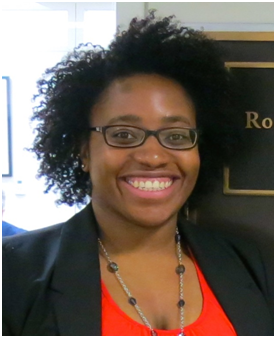 Eileen Oni, Ph.D., is a Rutgers iJOBS alumnus and currently an American Association for the Advancement of Science (AAAS) Science & Technology Fellow at the National Science Foundation. Her role as a Fellow is to assist in the decision-making processes for programs that study the science of Broadening Participation in Engineering.
When I imagine myself in industry I often see myself wearing a suit performing a task, but the details of those tasks are unclear. After speaking to other trainees about what tasks they envision performing in industry, they describe job definitions, but not specific tasks. This becomes problematic because while you may think that you are a good fit for a profession, performing those unknown duties might make you feel differently. I am surely not the first PhD student to ask the question: what job duties would I do in industry, more specifically Medical Affairs?