By Akshaya Vijayan Selvarajan
The latest Erdos Seminar featured Dr. Andrew Uzilov, Senior Director of Computational Biology at Veracyte. He shared insights from his accomplished career spanning over 15 years at the intersection of genomics, computation, and diagnostics
Dr. Uzilov, a true pioneer in this field, holds an undergraduate degree in biochemistry and computer science. His impressive trajectory bridges academic research and the biotechnology industry. At Veracyte, he leads efforts that utilize genomic insights from tumor biopsies to inform clinical decisions and diagnoses, thereby helping to prevent unnecessary surgeries.
The Expanding Scope of Bioinformatics
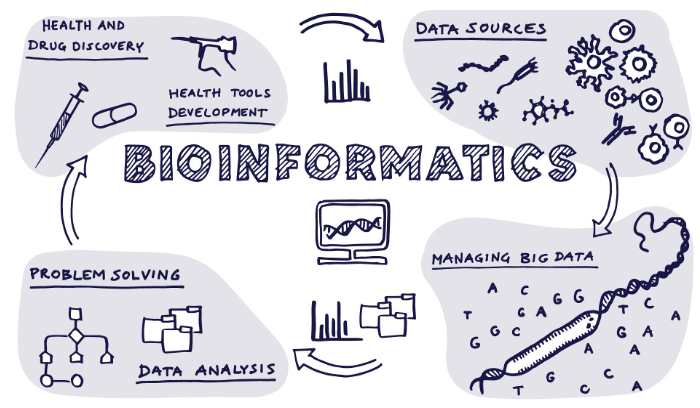
Bioinformatics is an integrative discipline that combines computation, statistics, and mathematics to extract meaningful insights from biological data. Its applications are wide-ranging, from mathematical modeling of biological systems and the use of physical and entropy-based parameters to protein structural modeling and simulation. It also encompasses the application of statistical methods to large-scale genomic datasets and the inference of polygenic risk scores in complex, multi-allelic diseases.
In his talk, Dr. Uzilov provided a panoramic view of the bioinformatics landscape, highlighting how computation serves as the cornerstone of nearly every aspect of modern biology. He described the diverse roles of bioinformatics from the development of algorithms for sequence alignment (aligning sequencing reads to a reference genome), to the inference of gene copy-number variation and SNPs (bases that differ from the reference genome), to the quantification of gene expression from RNA data, and finally to modeling biological entities as networks based on protein–protein interactions.
He emphasized the importance of emerging fields, including RNA structure prediction, knowledge modeling, and the integration of real-world clinical data into genomics for evidence-backed decision-making. These frontiers are transforming the way we approach translational bioinformatics and precision medicine.
For example, variant calling has become a standard practice in tumor boards to inform decisions on mutation-specific, actionable drugs, as well as the tumor burden of patients, an indicator of potential immune therapies. This approach enables the prediction of drug response, allowing for tailored treatments to be individualized based on genetics.
RNA structure prediction represents a critical frontier because RNA molecules impact gene expression, splicing, and translation through their secondary and tertiary structures. Understanding their structure is key to developing RNA-targeted therapeutics. Similarly, knowledge modeling through gene ontologies and machine learning helps unify diverse datasets such as genomics, transcriptomics, and clinical records, resulting in a holistic understanding of disease mechanisms.
For students seeking to establish a strong theoretical foundation, Dr. Uzilov recommended the seminal textbook “Biological Sequence Analysis” by Durbin, Eddy, Krogh, and Mitchison, describing it as an essential reference for anyone entering the field.
Skills That Matter in the Industry
Drawing from his transition from academia to industry, Dr. Uzilov discussed the skill sets most valued in biotechnology and pharmaceutical companies for computational roles. Beyond scientific knowledge, he emphasized the importance of computational proficiency and data-driven problem-solving.
He strongly recommended the following skills:
- Machine learning and deep Learning: Particularly for applications in genomics, such as variant classification, gene expression pattern recognition, and the prediction of regulatory elements and RNA secondary structures. For example, neural networks are used to model sequence-function relationships, enabling the prediction of structure and the detection of somatic mutations from noisy data.
- R for exploratory data analysis and Python for data analysis and visualization. In bioinformatics, these languages are routinely used to process and interpret large-scale datasets such as gene expression matrices, variant call files (VCFs), and single-cell sequencing objects. R is used for transcriptomics with DESeq2 or edgeR, whereas Python supports statistical modeling and integration with deep learning frameworks such as PyTorch and TensorFlow.
- SQL for handling large-scale biological databases, especially in managing and querying large databases - gene annotations, clinical metadata, genomic variants.
- Cloud Computing: Amazon Web Services and other cloud computing platforms, noting that AWS certificationscan be advantageous. Cloud computing platforms that enable scaling, high-performance computation, and storage of massive genomic datasets, allowing for faster bioinformatics processing. For example, AWS Batch and EC2 instances are used to run GATK or Nextflow pipelines across multiple patient samples simultaneously.
Professional Growth and Networking
Dr. Uzilov emphasized the cultural and operational shift from academia, where the focus is on discovery and publication, to industry, where priorities often center on product development, timelines, and cross-functional collaboration. He also noted that communication and teamwork differ between the two environments: academic work often involves smaller, more independent groups, whereas industry projects require coordination across multiple departments.
Beyond technical expertise, Dr. Uzilov emphasized the importance of professional and interpersonal skills. He encouraged attendees to prioritize networking, such as sending personalized connection requests and engaging thoughtfully on LinkedIn. He also stressed that customized cover letters are crucial when applying for positions in the industry, as they help capture the attention of hiring managers.
For those seeking more information or career guidance, Dr. Uzilov can be reached at andrew@uzilov.org.
This article was edited by Junior Editors E. Beyza Guven and Senior Editor Joycelyn Radeny.