By E. Beyza Guven
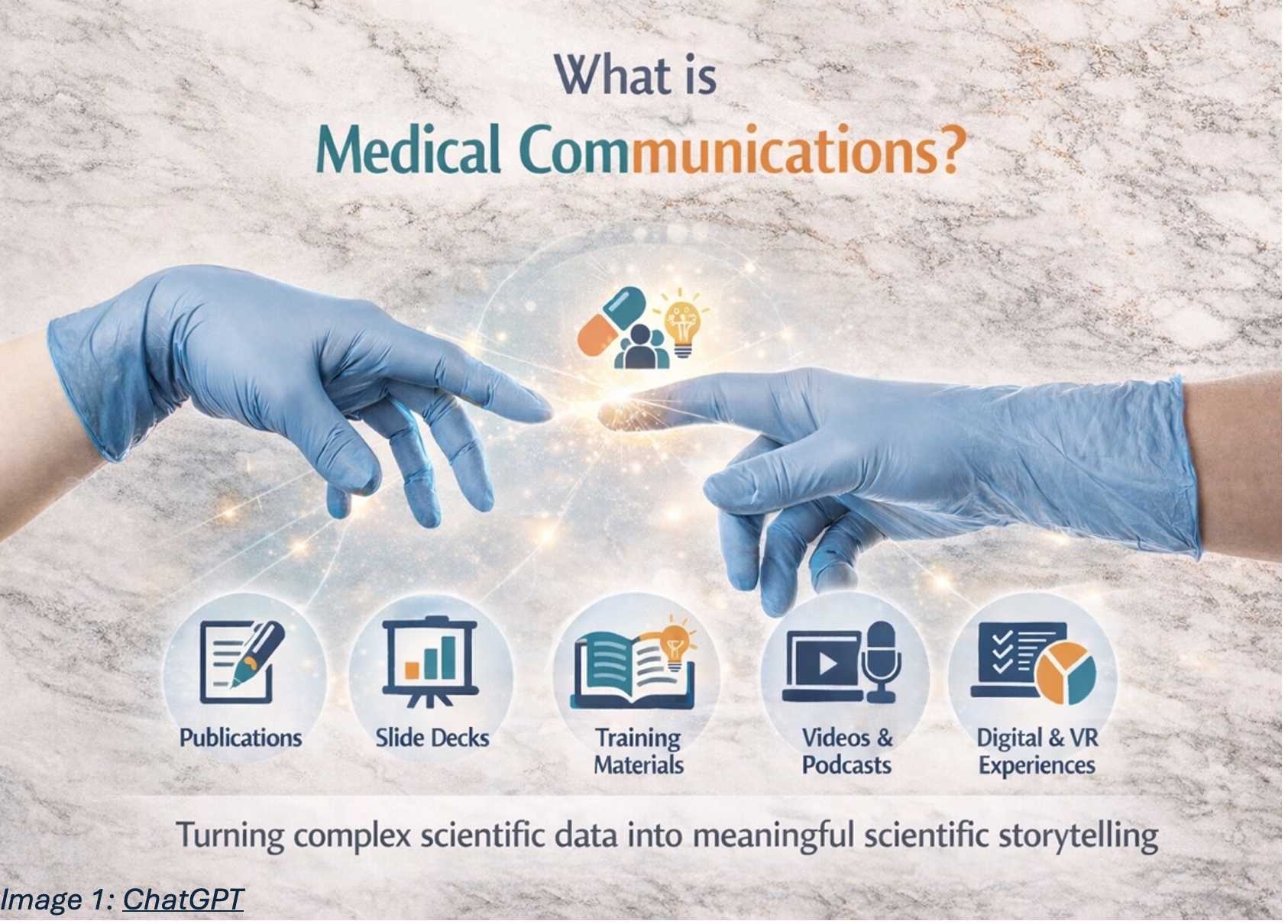
If you’re a graduate student who loves science but isn’t sure the lab is where you want to stay, medical communications (often called med comms) might be a career path worth exploring. That was the clear message from a recent panel where five professionals shared their journeys into the field, day-to-day tasks, and what they wish they had known as trainees.
What stood out most? There is no single path into medical communications, and that’s good news.
There’s No “Right” Background (Just a Scientific One)
Each panelist arrived at medical communications from a different starting point: neuroscience, biomedical sciences, cardiovascular research, or behavioral neuroscience. Some began their training fully expecting to stay in academia, while others knew early on they wanted something different. A few discovered medical communications almost by accident through shadowing, networking, or simply talking to people outside their lab.
Despite these different paths, the common thread was not a specific degree or technique. It was comfort with complex science, curiosity beyond one’s own project, and enjoyment of explaining ideas to others. Many realized that what energized them most was not generating data, but teaching, presenting, writing, and thinking strategically about the bigger picture.
So… What Is Medical Communications?
At its core, medical communications is about helping scientific data reach the right audience in a clear, accurate, and meaningful way. Most professionals work at agencies that partner with pharmaceutical or biotech companies, supporting everything from publications to medical education to internal training.
On a day-to-day basis, this might mean turning a dense clinical paper into a concise slide deck, drafting an abstract for a conference, helping plan when and where data should be presented, or collaborating with designers and editors to make complex information easier to understand. The exact work varies by role, but the underlying goal is always effective scientific storytelling.
What Agency Life Is Really Like
Several panelists emphasized how different agency life feels compared to academia. The pace is faster, projects move on defined timelines, and feedback is constant. Work is highly collaborative and often involves project managers, editors, designers, and client-facing teams. Revisions are expected, and no deliverable is ever truly a solo effort.
For many former trainees, this environment is refreshing. There is variety across projects, flexibility in how and where you work, and frequent exposure to new therapeutic areas. While you may not become the world’s expert in a single niche, you do become very good at learning quickly and adapting, which are essential skills in industry.
What Employers Look for in Entry-Level Medical Writers
One reassuring theme from the panel was that entry-level and associate medical writers are not expected to know everything. Instead, agencies look for a specific set of qualities that many graduate students already have, often without realizing it.
Attention to detail is critical. Small inaccuracies, formatting issues, or missing references matter in regulated environments, and precision builds trust with clients and internal teams. At the same time, entry-level writers are expected to be adaptable. You may work in a therapeutic area you have never studied before, and the ability to learn quickly and ask thoughtful questions is highly valued.
While clear scientific writing is a well-known aspect of the field, being open to receiving AND incorporating feedback is a highly important task that many may overlook. Panelists repeatedly emphasized that feedback is not personal. It is part of the process. Successful medical writers are those who can incorporate comments from managers, editors, and clients efficiently and keep moving forward.
Time management and organization also come up early in the career. Even at the associate level, writers often juggle multiple projects with overlapping deadlines. Being reliable, meeting timelines, and communicating early when something might slip are qualities that managers consistently look for.
Finally, curiosity and professionalism go a long way. Agencies want writers who care about the science, think about the audience, and approach their work as a service by helping clients communicate data responsibly and effectively.
Learning to Reframe Your PhD Skills
One of the strongest messages from the panel was that graduate students already have the right foundation. They just need to talk about it differently. Skills developed during a PhD, such as critical thinking, literature evaluation, data interpretation, and presenting complex ideas, translate directly to medical communications.
Panelists encouraged students to practice explaining science to non-specialists and to seek experiences beyond the lab, whether through teaching, blogging, outreach, or shadowing. Reflecting on what truly energizes you can also help guide career decisions and prepare you to speak confidently in interviews.
Breaking Into the Field
For many entry-level medical communications roles, the hiring process includes a screening interview, a writing or presentation test, and multiple conversations focused on communication and fit. These tests often resemble an enhanced journal club by asking candidates to turn a scientific paper into a clear, audience-focused slide deck with proper sourcing and key takeaways.
Not having prior industry experience is common at this stage. Fellowships, internships, and junior roles are designed for scientists transitioning out of academia. Informational interviews and genuine relationship-building often play a major role in helping candidates get their first opportunity.
A Reassuring Takeaway for Graduate Students
If you’re unsure about your next step, you’re not behind. You are exactly where many successful medical communicators once were. Entry-level medical writing roles are not about being an expert on day one. They are about curiosity, clarity, adaptability, and a willingness to learn.
Medical communications offers a way to stay close to science while using the skills you’ve spent years developing, often with more collaboration, flexibility, and immediate impact than traditional academic paths. Your PhD has already prepared you more than you think. You just have to let those skills speak a new language.
This article was edited by Senior Editor Joycelyn Radeny.